
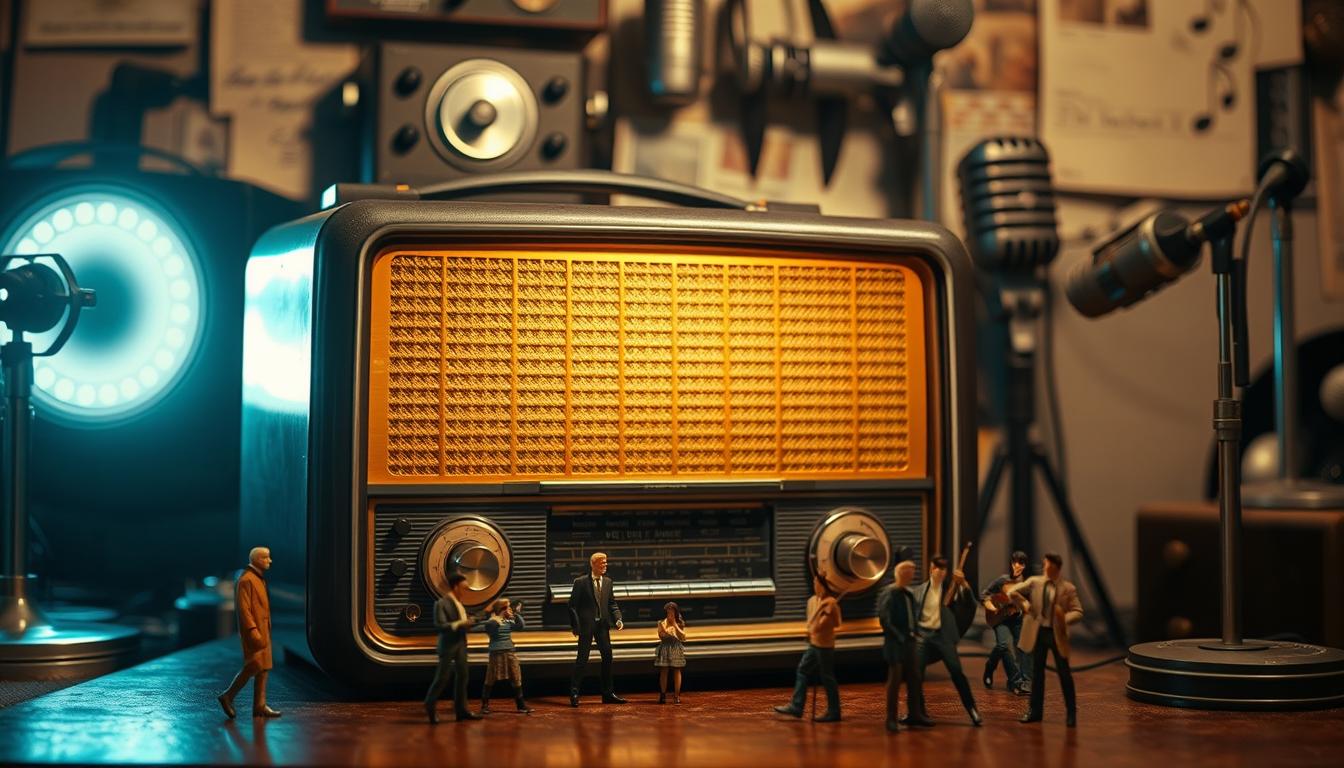
Music storytelling turns everyday feelings into lasting tales. Songs like “The Devil Went Down to Georgia” and Queen’s “Bohemian Rhapsody” capture life’s ups and downs. Each tune leaves a lasting impression long after it ends.
Radio has been a key player in sharing these stories. Delilah Rene Luke’s show reaches 8 million listeners every week. Her show is a nightly stage for musical tales.
Every day, over 100,000 people call in, but only 25 get to share their stories. This shows how songs bring us together.
From the 1920s to today, music has always been a universal language. Artists like Paramore and Sabrina Carpenter keep this tradition alive. Each song tells a story, waiting to be found.
The Emotional Impact of Music on Our Lives
Music has a deep emotional impact that goes beyond just enjoying it. As Ben Fielding says, songs add emotion to our words, helping us deal with life’s ups and downs. Our personal experiences with certain songs can make them unforgettable, linking them to special moments.
Studies show that melodies and lyrics can stir strong emotions. A 2011 study found that happy music makes us better at seeing happy faces. Sad songs, on the other hand, help us notice sad expressions more. Music therapy even helps people with Alzheimer’s by bringing back memories.
In Santa Rosa, California, playing classical music in public spaces cut down on loitering by 20%. This shows music’s power to change our mood and behavior. Introverts and extroverts both use music to cope with stress or celebrate big moments. Even background music in stores can influence what we buy, showing its subtle yet strong emotional effect.
Music brings people together, whether it’s at a concert or when someone is alone. It’s more than just sound; it’s a universal language that connects us across time and space. It turns moments into memories and memories into something meaningful.
Iconic Songs That Tell a Story
Story songs turn melodies into mini-movies. They range from folk ballads to rock epics, shaping pop culture for decades. Songs like Bohemian Rhapsody or American Pie tell entire stories in just three minutes. This shows that great stories can fit into short songs.
Story songs need “a compelling premise, a developed plot, vivid characters, setting, conflict, and a satisfying conclusion.”

Johnny Cash’s A Boy Named Sue uses humor and conflict to explore a father’s joke and its lifelong impact. Hotel California paints a surreal hotel as a metaphor for excess. The Wreck of the Edmund Fitzgerald mourns a 1975 ship disaster. Each song weaves history and emotion into lyrics that linger long after the music fades.
Radio kept these tales alive. The radio played on through generations, broadcasting Like a Rolling Stone’s existential crisis or Papa Was a Rolling Stone’s generational clash. Even today, songs like Jeremy tackle current issues, showing musical stories adapt with society. These tracks remind us: a great story can outlast any chart peak.
Personal Stories Behind Famous Tracks
Every hit song has a story behind it. Song origins often start with personal moments that become timeless art. For example, “Coal Miner’s Daughter” and “Coat of Many Colors” were inspired by real-life struggles. These songs show how sharing our vulnerabilities can connect us across time.
Wall of Voodoo’s “Mexican Radio” has a fascinating story. It was born from late-night talks between Stan Ridgway and Marc Moreland in 1982. The song hit No. 58 on the Billboard Hot 100, blending road trips with deep thoughts. Despite a low budget, its raw energy won over many fans. Today, it has over 15 million streams on Spotify, showing its lasting impact.
Miguel’s “Sure Thing” also has a compelling story. Written in 2007 but released in 2011 after legal delays, it became a hit. Miguel faced early financial struggles, but his hard work paid off. Now, it tops Pop radio charts, mixing R&B and soul for millions of listeners.

Radio played a key role in sharing these stories. When “Mexican Radio” played, listeners heard more than just music—they heard stories of life on the road. Miguel’s song also rose to fame thanks to radio, connecting personal stories with a wide audience. These tales remind us that every song is a doorway to someone’s past, inviting us to listen more deeply.
The Role of Radio in Sharing Music
Radio has a huge impact on music culture. From the start, radio music history shows how broadcasts shaped music trends and brought people together. Stations like WABC in the 1970s started rock formats, and today’s streaming platforms use similar playlist strategies. The phrase “the radio played on” shows its lasting role in our lives.
Early radio DJs were like cultural leaders, introducing jazz, rock, and hip-hop to many. This music sharing tradition lives on, with 57% of listeners finding new artists on AM/FM. Even with streaming’s rise, 72% of online listeners tune into traditional radio every week.

Radio culture is all about shared moments. Local stations like WLS Chicago or shows like Delilah bring people together. Music in ads, jingles, and IDs helps build brand loyalty—49% of listeners remember theme songs. During drive times, radio’s 82% reach is key for advertisers, bringing in $14.4 billion a year in U.S. ad revenue.
Modern radio keeps its core strengths while evolving. Podcasts and live streams expand its reach, but live DJs’ human touch is unique. With 54% of listeners more likely to buy music they hear on-air, radio’s storytelling through sound is a cultural treasure. Even in the digital era, the radio connects listeners to music’s power, just as it has for nearly a century.
Music Genres That Capture Unique Tales
Every genre has its own voice, shaping how stories are shared. Genre storytelling varies widely—from country ballads to hip-hop anthems—each style crafting narratives uniquely. These genre narratives reveal the soul of communities, blending history and emotion.
Country music’s musical traditions often tell tales of life’s highs and lows. Story songs dominate this genre, painting scenes of small-town life or heartbreak. Hip-hop, on the other hand, uses rhymes to map city streets, blending personal struggles with broader social themes. Both styles show how cultural music mirrors the world around listeners.

Blues roots trace to African American struggles, using 12-bar structures to preserve cultural music legacies. On the radio, stations like 95.5 KLOS broadcast these stories, letting the radio played on as a bridge between eras. Reggae’s rhythms, blending Jamaican resistance with global beats, show how genres transcend borders.
Every note holds a world. Music’s stories outlive empires, proving art’s power to connect across time.
From folk ballads to punk’s rebellions, genre storytelling adapts but stays true to its roots. Hip-hop’s rise or reggaeton’s global spread highlight how musical traditions evolve without losing their essence. Each genre’s tales, passed through airwaves or live stages, remind us: music’s stories are alive, forever changing yet timeless.
The Evolution of Lyrics Over Time
Lyrics have changed a lot over the years, showing how society has evolved. In the 1950s, rock ‘n’ roll songs were all about joy. But as time went on, lyrical trends changed. A study of 6,000 Billboard Hot 100 songs found that anger in lyrics peaked in 2015. Joy in songs decreased, except for a brief rise in the mid-1970s.
This change shows how song poetry mirrors cultural shifts. From simple folk tales to today’s complex stories, lyrics have adapted.
Economic factors also played a role in this change. When the economy was strong, lyrics became more complex. More people moving around and diversity led to more creative risks in songs. The radio helped spread these stories across different generations. Now, streaming services focus on catchy, short songs.
In the 1980s, songs like U2’s “Where the Streets Have No Name” showed that lyrics and melodies could work together. Today, artists like Taylor Swift and Kendrick Lamar are pushing the limits. They mix personal stories with political messages.
“The melody must serve the story, not overshadow it,” warn music scholars, echoing timeless advice for storytellers.
From songs of protest to deep, personal verses, lyrical evolution keeps going. Each era adds its own mark to the songwriting history we explore today.
The Effect of Live Performances on Songs
Live music creates shared moments that radio can’t match. While radios play in private, concerts let artists change songs live. They add solos, chants, and visuals that make lyrics tell deeper stories.
Concerts are special because they adapt to the audience. A worship leader said live hymns made crowds cry, showing energy matters. Even small changes, like a slower beat, can create strong emotional bonds.
Science supports this. Live shows boost dopamine, like human rewards. Brain scans show more activity in the nucleus accumbens, showing live music’s impact goes beyond sound. This connection is lost when listening alone.
During the pandemic, 60.7% of people changed how they used music. Virtual concerts helped fill the gap left by canceled tours. They showed that connection with music can stay strong even online.
Legendary shows like John Coltrane’s Blue Train show tempo’s impact. Even plants react better to soothing music. Live music’s power is in blending art and biology, making each show unique.
How Songs Inspire and Create Change
Songs can powerfully engage the politics and culture of our times, they can redeem the complexities of our times and offer them back as sacrifices of praise.
Music has always been a force for change. Songs like Billie Holiday’s “Strange Fruit” and Bob Dylan’s “Blowin’ in the Wind” have sparked movements. They show how inspirational songs can lead to change.
Edwin Starr’s “War” and U2’s “Sunday Bloody Sunday” are examples of songs of change. They turned words into powerful messages. Today, music continues to make a difference. Artists like The Sigauque Project and CMFD use their music to raise awareness about important issues.
In Mozambique, a song after the 2013 floods helped with disaster relief. This shows how songs of change can tackle today’s problems. Radio and concerts also play a big role in spreading messages of unity and change.
Aretha Franklin’s version of “Respect” became a symbol of feminism. This shows how songs can evolve and inspire new generations. Music has the power to turn pain into purpose, inspiring action and change.
Connecting with Others Through Music
Music has always been a bridge between people. It connects us from live concerts to quiet moments with the radio on. Shared musical experiences, like community choirs or streaming playlists, build a music community across generations.
Radio is a lifeline for many. The BBC Loneliness Experiment showed how it eases isolation. Wavelength gives radios to shelters, proving music’s power to form bonds in tough times.
While younger listeners stream music, platforms like podcasts keep connections alive. Podcasts like “My Brother, My Brother and Me” share stories. Older adults use music to regulate moods and stay socially engaged, joining local groups.
Silver Memories radio improved well-being in aged care. This shows music’s timeless role in nurturing empathy and shared purpose.
Connecting through songs is more than sound—it’s about belonging. Whether through a shared playlist, a live performance, or the radio, music reminds us we’re never alone. It’s the thread that weaves strangers into a chorus of shared humanity, echoing stories that resonate across divides of age, culture, and space. As technology evolves, music’s heart remains the same: a universal language that bridges every silence and gap.