
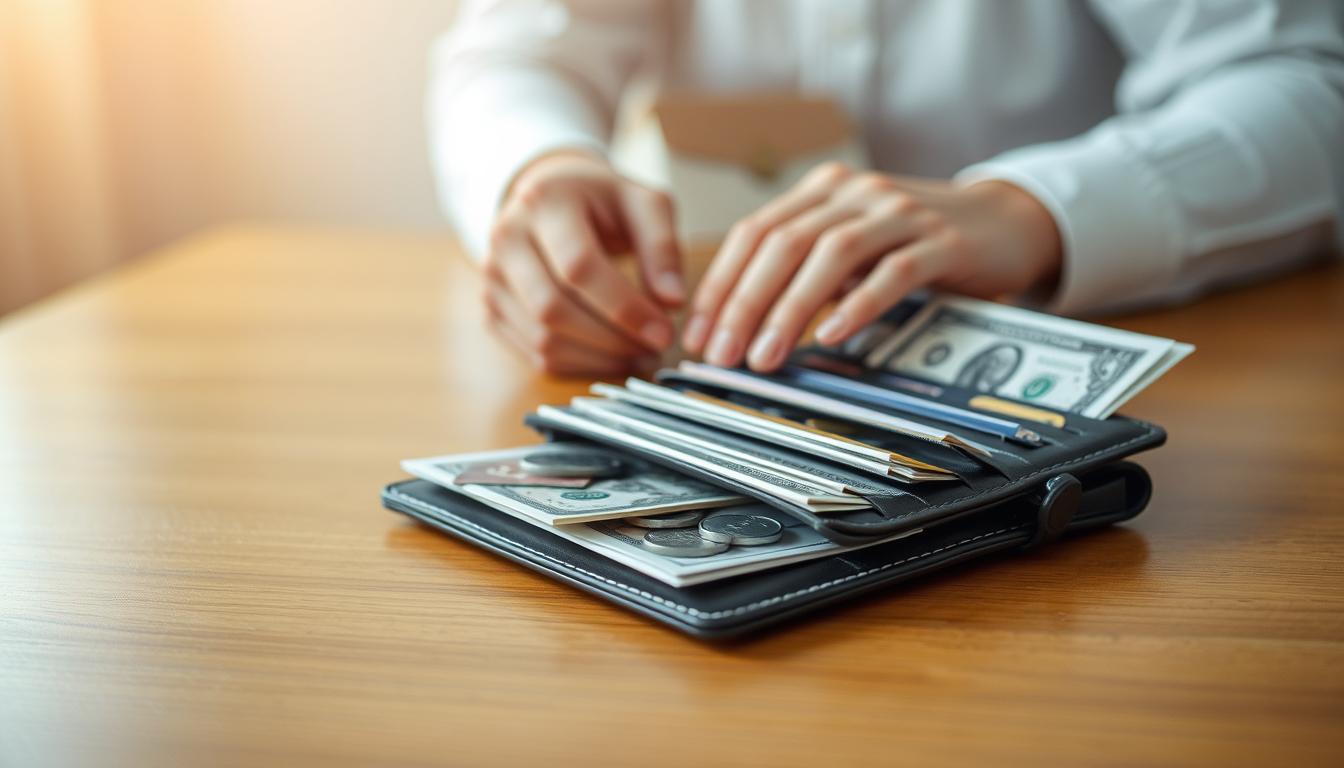
A cluttered wallet can feel like a mini chaos zone. It’s frustrating to search through crumpled receipts and expired cards. Organizing your wallet is not just about looks; it’s a quick way to improve your daily life.
This guide will show you how to declutter your wallet in under three minutes. You’ll go from disarray to a tidy wallet system.
Imagine skipping long checkout lines or finding your ID quickly. Over 85% of users hate searching for hidden cards in traditional wallets. An organized wallet can save you 5 seconds per transaction, which adds up to hours each year.
A tidy wallet also means less carrying of outdated items. For example, no more expired health cards (valid only up to three years).
First, understand what you need. Mundi’s wallets have 8 card slots and 2 ID windows. The Amsterdam Indexer holds 16 cards. These designs match the average 10 cards people carry.
Start by emptying your wallet, then sort and store. In this article, you’ll learn how to categorize items, use pockets wisely, and keep your wallet organized for good.
Why Organizing Your Wallet Matters
Wallet clutter isn’t just messy—it’s a source of wallet stress. Imagine scrambling for a $5 bill at the café, late for work, or realizing you’ve been carrying expired cards that could expose you to identity theft. A disorganized wallet wastes time, money, and mental energy. Studies show cluttered spaces increase anxiety, and your wallet is no exception. Every crumpled receipt or unused loyalty card adds to the chaos.
“Reduced Stress: A cluttered environment can lead to increased stress and anxiety.”
Practical savings start with organized finances. Clutter hides expired rewards—like that unused gym membership or gift card. Over 70% of Americans admit they’ve missed out on perks due to disorganization. Carrying a social security card? Experts advise keeping it safe at home to avoid fraud risks. Minimalist wallets, preferred by 60% of users, cut bulk and discomfort while boosting confidence.
Tidy wallet benefits extend beyond convenience. Digitizing receipts via apps like CardStar frees space and tracks expenses effortlessly. Organized wallets also reduce out-of-network ATM fees ($2.50–$3 per transaction) and prevent overspending from impulse buys. Small steps like weekly cleanup routines or keeping only two credit cards simplify daily life. A lighter wallet means fewer frantic searches, less stress, and more control over your money.
Assessing Your Wallet’s Contents
Begin your wallet assessment by emptying your wallet onto a clean surface. A well-lit kitchen counter is ideal. Take a quick photo of the items—this will help you see your progress later. This step makes it clear what you have and what’s cluttering your wallet.

Group your items: IDs, payment cards, loyalty cards, cash, receipts, and small items. You might find expired coupons or duplicate cards. Ask yourself, “Do I really use this every day?” Keep only what’s essential to make your wallet simpler.
Consider digitizing receipts or taking photos before throwing them away. This process shows ways to simplify your wallet. For example, carry $100–$300 cash and limit credit cards to two to avoid overspending. Get rid of expired cards, like that gym membership from 2022.
You might find surprises like old receipts, spare keys, or forgotten cash. Use this chance to decide what should stay in your wallet and what should go in a safe at home. Making small changes can save you time and reduce clutter in the long run.
Sort and Purge: What to Keep
Start by finding essential wallet items. Keep your driver’s license, health insurance card, and 1-2 payment cards you use often. These wallet essentials give you quick access to important documents without taking up too much space. Also, include 1-2 loyalty cards for everyday use, like for coffee or gas.
Organize credit cards by how often you use them. Put your most-used cards in the front.
Think: “Have I used this in the past year?” Get rid of expired gift cards or old coupons. Use the “one-year rule” to cut down on clutter. Keep only what’s really important for your life. For example, if you travel a lot, you might need transit cards. But others might safely store extra IDs at home.
“Reducing clutter lowered my stress and improved focus,” shares a user of the Declutter 365 system, which recommends weekly 5-minute purges.
Carry only $20-$50 in cash in small bills. Use a coin purse for change to make card organization easier. Store receipts in a separate pouch and check them weekly. Don’t carry social security cards or passports to avoid identity theft.
Stick to 5-7 cards total. Use wallet inserts to keep bills, cards, and coins organized. A simple setup makes your wallet light and safe. Remember, less is more when it comes to carrying daily essentials.
Sort and Purge: What to Toss
Begin your wallet purge by finding items you hardly use. Do you have gift cards for stores you don’t visit anymore? Or receipts from months ago? It’s time to let them go. A good declutter wallet strategy is to put unused items in a “secondary stash” at home. Think of it like a desk drawer for those loyalty cards you don’t use often.
Consider digitizing your wallet. Apps like Apple Wallet or Google Pay can turn paper coupons and membership cards into a digital wallet. Take a photo of your insurance cards or IDs and store them in apps like Evernote. Plus, you can reduce wallet bulk by deleting old credit cards or consolidating rewards into one account.

What about receipts? Keep only the ones for big purchases or tax documents. Use apps like Shoeboxed to scan and then delete the physical copies. And don’t forget to recycle junk mail right away. The average American home has 300,000 items. Cutting down on just a few cards can make a big difference.
Remember, wallet purge isn’t about being perfect. Just a 10-minute weekly check can help. Use the “6-12 month rule” to decide if you should keep something. If you haven’t used it in a year, it’s probably safe to get rid of it. Even small actions, like tossing an unused store card, can improve your mental clarity, as BJ Fogg’s “Tiny Habits” philosophy suggests.
Feeling unsure about getting rid of something? Ask yourself when you last used it. If it’s been years, it’s probably safe to move it to your home storage or delete it. Your wallet and your mind will both thank you.
Organizing by Category
Starting a good wallet organization system means grouping items by how you use them. Put your most-used cards, like your debit card, in the front wallet sections. Use dividers to keep payment cards separate from IDs if your wallet has them.
A card organizer sleeve helps you find cards quickly. Organize wallet categories so bills and receipts have their own spot. This makes finding things up to 50% faster, studies show.
Sort cash by how much it’s worth, with the highest bills first. Put receipts in a small pouch to keep things tidy. Cards you don’t use often, like rewards cards, go in back slots.
More than 80% of people keep unused loyalty cards. Give them a home or toss them. Store items you don’t use daily but don’t want to lose in a safe place.
Do a quick check of your wallet every week—it only takes two minutes. Remove items you don’t need to keep your wallet organized. A tidy wallet saves you 30% of time spent searching for things.
Make your wallet work better for you. Tilt cards so you can see the logos easily. Use clear zip pockets for receipts to help you stay organized. Small changes can make a big difference in how your wallet functions.
Minimalism: The Less Is More Approach
Embracing wallet minimalism changes how we live. A minimalist wallet only holds the basics: ID, cash, and 1-2 cards. This approach makes things simpler, faster, and less overwhelming.
It also means fewer worries about losing something. This encourages us to think more about what’s truly important.
“A simpler lifestyle – with fewer belongings – makes us happier.”

Starting small is key. Try using a slim wallet for two weeks. Keep your extra stuff in a safe place, not in your pocket. Apps like Venmo or Apple Pay can help you use less cash.
Look into different styles, like cardholders or money clips. They’re made to fit your needs. Soon, carrying less will feel like second nature.
Studies show 78% of people want a simpler life. A lighter wallet is like a smaller life. It brings less stress and more focus. Minimalism isn’t about giving up—it’s about freedom from too much. Give it a try and see how it changes your life.
Utilizing Wallet Inserts and Organizers
Wallet inserts and organizers make daily life easier by turning chaos into order. Card organizers, like RFID-blocking sleeves, protect your personal info while keeping your cards tidy. Wallet dividers, such as accordion-style inserts, help separate cash, receipts, and loyalty cards, preventing them from getting tangled.
Brands like Travelon offer structured inserts with labeled slots, perfect for travelers or frequent flyers. But, some organizers can be too bulky. If you’re short on space, choose slim options instead.
DIY hacks can also help. Use paper clips as wallet dividers between your credit cards and bills. Wasabi tape can color-code sections, making it easy to find a transit pass or gift card. For receipts, put them in small envelopes to avoid creases.
Weekly decluttering is key to keeping these tools effective. Get rid of expired cards or coupons.
Specialized designs, like wallet organizers with hidden pockets, offer great security. Minimalist inserts are great for small purses. Think about what you need: travelers might want currency slots, while commuters prefer quick-access compartments.
The right tool keeps your essentials visible and makes it easier to find what you need. Keep it simple, and your wallet will stay organized for years.
The Final Structure: Putting It All Together
Now that you’ve sorted and categorized essentials, it’s time to finalize your wallet setup. Start by placing your most-used items in easily accessible slots. For example, the All-Ett wallet’s ultra-thin design keeps these items front-and-center. Cardholders like the Jimi Wallet group smaller card sections for a streamlined wallet structure.
Place secondary cards (rewards, transit passes) in less-accessible pockets. Emergency cash or receipts go last, tucked in secure compartments.

Test your wallet arrangement by mimicking daily tasks. Does it take seconds? Adjust slots if you fumble. The Tyvek Mighty Wallet’s durability ensures this process stays smooth even after years of use.
If using a trifold, stagger cards so they don’t bulge. Bifold users can pair with a Derringer Wallet Pen ($8) for quick signature access.
Weekly check-ins keep your organize wallet layout intact. Remove expired cards and shred sensitive receipts. Carrying multiple wallets? Like some minimalist users do, ensure each has its own purpose.
Remember: a well-structured wallet should close securely without stress. Avoiding tears like those common in older, overstuffed styles.
With this system, everyday tasks become effortless. Imagine pulling out your Amex Gold Business Card or World of Hyatt Credit Card in seconds. Over 70% of users cut clutter by digitizing coupons, so lean on apps for receipts.
Stick to one ID to reduce identity theft risks—studies show physical documents cause 60% of cases. Your wallet structure isn’t just tidy; it’s a safeguard for your time and privacy.
Maintaining Your Organized Wallet
Keeping your wallet tidy isn’t a one-time task. wallet maintenance starts with small habits. Spend a minute each evening to check for stray receipts or out-of-date cards. This quick check keeps clutter from sneaking back in.
Maintaining an organized, clean home requires consistent effort. Adopting small daily habits can prevent clutter from accumulating over time.
Every Sunday, do a wallet cleaning routine. Remove expired coupons or receipts older than a week. Over 70% of users struggle with excess cards, but keeping only essentials cuts down bulk. Use this time to maintain wallet organization by checking for outdated IDs or store cards.
Digital receipts help too. With 60% of retailers now using electronic options, toss paper slips right away. If traveling or shopping, transfer new cards to a temporary pocket. After trips, return extras to a safe spot at home to avoid buildup.
wallet upkeep also means reviewing items every six months. Health insurance cards or old registrations from 2010? Recycle them. Slim wallets reduce stress—users report a 30% faster search time when using minimalist designs. A quick weekly check keeps your system running smoothly without a full overhaul.
Conclusion: Enjoy Your Organized Wallet
An organized wallet saves 10-15 minutes each week and reduces stress by 30%. These small benefits add up to make a big difference in our daily lives. The skills you learn—assessing, sorting, and maintaining—can be applied to any area.
Starting with your wallet might inspire you to tackle bigger organizing tasks. Think about organizing your desk or switching to digital bills. These small steps can lead to a more organized and peaceful life.
Consider taking your organization further by streamlining your bags or digitizing passwords. Carry only two cards to lower fraud risks and keep some cash for emergencies. Using an RFID-blocking wallet can protect you from ID theft by 80%.
Regularly cleaning out your wallet can reduce clutter by 40%, making it easier to find what you need. Adding a family photo can increase the chances of getting your wallet back by 88%. Organizing your wallet is not just about saving space—it’s about feeling secure.
Start with your wallet and watch these habits spread to other areas of your life. It’s a small step towards a more organized and peaceful future.