
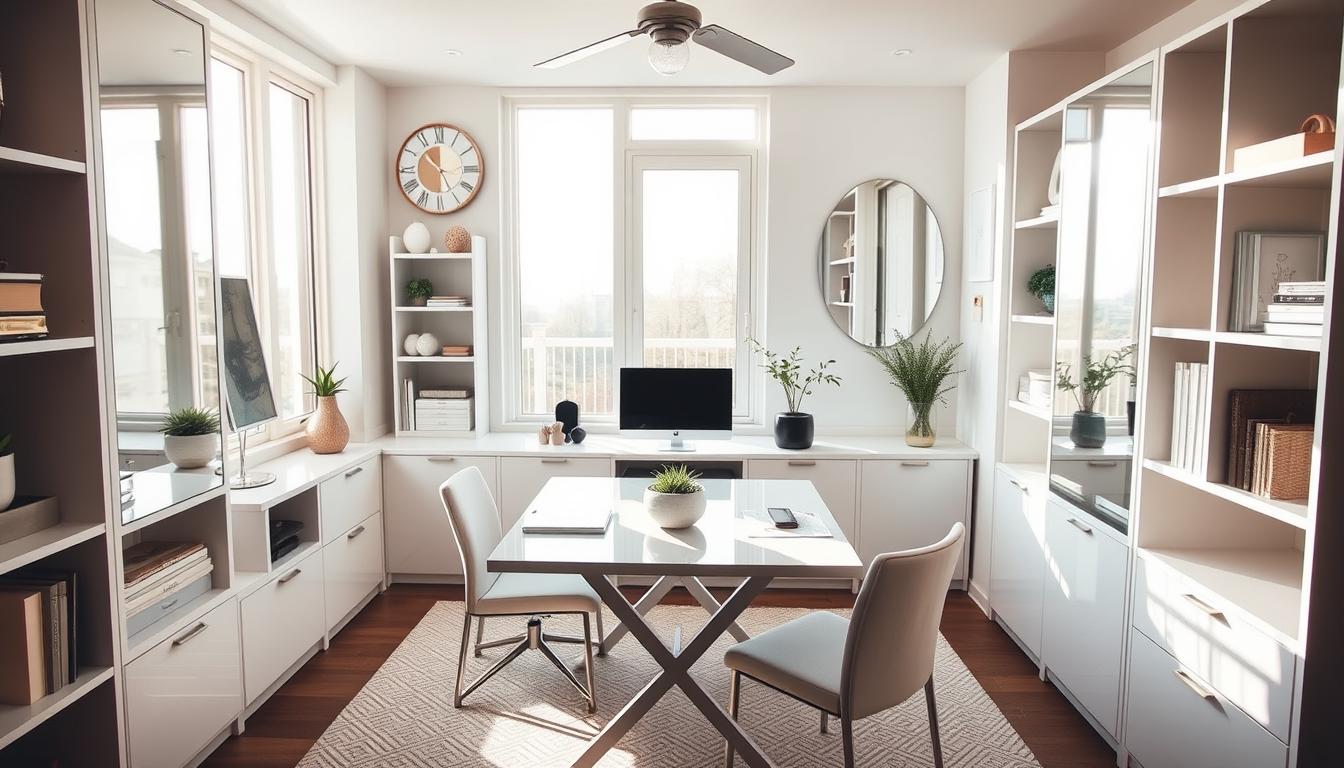
Small spaces don’t have to feel cramped. The right small space solutions can turn a tiny room into a bright, open area. Simple tricks like light colors and smart layouts can make a big difference. These are affordable and don’t require big changes.
Imagine a 200-square foot apartment. At 20, the author lived in one, but made it feel bigger. Decluttering, light walls, and mirrors turned tight spaces into airy zones. The secret? Using color, furniture placement, and light to trick the eye into seeing more room than there is. Let’s explore how to make every inch count.
Embrace Light Colors for Walls and Furnishings
Choosing the right light wall colors can change a small space. Soft white or light gray colors reflect up to 50% more light. This makes the room brighter and seems deeper.
For a unified look, use a neutral color palette with these small room paint colors. Think of gentle creams or pale blues. They keep the room looking balanced.
Adobe Color CC makes picking space-enhancing colors easy. Its palette generator helps mix neutrals with subtle accents. This ensures every color works well together.
South-facing rooms do well with cooler tones like seafoam greens. North-facing spaces are better with warmer neutrals like taupe.

Reflective paint finishes like satin or semi-gloss add shine. They bounce light around, making walls seem farther away. This makes floors feel more open.
Monochromatic schemes, where furniture matches wall colors, make rooms seem bigger. This trick makes even a small space feel more open and welcoming.
Pro tip: Match ceiling paint to walls to make rooms feel larger. A study shows this can make rooms seem 20% bigger. Light-colored upholstery and clear acrylic tables also help keep the space feeling open.
Optimize Floor Plans for Space Efficiency
Smart small room layouts start with clear traffic flow optimization. Over 90% of effective floor plans focus on pathways. Leave 2-3 feet between seating and walkways. A well-placed sofa or desk shouldn’t block entryways or cut off natural light.
Use a tape measure to sketch your space first. This helps avoid buying oversized furniture that crowds walkways.
Furniture arrangement tips like grouping pieces around a central focal point create cozy zones without clutter. Try floating a dining table in the center of a room for flexible use. Space-saving floor plans often pair slim-profile sofas with legs to keep sightlines open.
Built-in storage or nesting tables let you adapt layouts as needs change, freeing up square footage.

Multipurpose furniture acts as a game-changer. A storage ottoman doubles as seating and a catchall, while a Murphy bed vanishes into walls at day’s end. Multipurpose furniture like fold-down kitchen islands or shelving beds maximize every inch. Choose pieces with vertical storage, like a ladderback chair or wall-mounted desks, to keep floors clear.
Balance scale by matching furniture to room size. A 10×10 room might pair a 7-foot sofa with a console table instead of bulky sideboards. Area rugs help define spaces without walls, guiding traffic flow and tying decor together. With these strategies, even tiny rooms feel functional and welcoming.
Harness the Power of Mirrors
Mirrors do more than show your reflection. They create the illusion of more space. Start by using mirror placement tips to make small rooms feel bigger. Place space-enlarging mirrors opposite windows to reflect natural light and brighten up the room.
A large mirror behind a lamp or candle can also make artificial light seem brighter.
Decorative mirrors can also serve as art pieces. Try a gallery wall of framed mirrors to add texture and reflect light in new ways. For a bold look, consider a full-length mirror wall in entryways or hallways to make the room seem deeper.
Light-reflecting techniques like angled mirrors can also redirect daylight to darker areas.
Place mirrors at eye level for practical use, or use oversized ones above sofas or beds to make the room feel bigger. Frameless mirrors blend in, while ornate frames add style. Even renters can use freestanding mirrors or adhesive-backed panels. Every surface can be used to reflect light and change how we see a room.
Keep it Clutter-Free for a Spacious Look
Clutter makes small rooms look even smaller. But, decluttering small spaces can make them feel bigger right away. Begin by asking if each item is useful or brings joy.
Studies show 70% of homeowners feel cramped by big furniture. So, choose minimalist room decor that doesn’t weigh down the space.

Embrace negative space—empty areas that balance your decor. A 75% of designers say using the same colors and textures reduces visual clutter reduction.
For storage, use hidden storage ideas like bins under beds or coffee tables with drawers. This keeps things out of sight.
Organization for small rooms works best with simple habits. Use slim shelves 30″ high to hide clutter. Vertical hooks are great for accessories.
A 90% of experts suggest having one big artwork above sofas instead of many. This keeps the space clean.
Small rooms feel better when things have their place. Door-mounted racks or furniture with hidden spots make cleaning easy. A 50% of homes use items that serve more than one purpose. This shows that less is often more. Clean up a little every day—your space will appreciate it.
Use Vertical Space Wisely
Maximizing vertical space can turn small rooms into open spaces. Start with tall bookcases that go all the way to the ceiling. These vertical storage solutions make walls useful and beautiful. Adding wall-mounted storage like floating shelves also keeps floors clear while keeping things stylish.
A study found that these systems can increase usable space by 30%. This shows that using ceiling height is more than just about building design.

Don’t just stop at shelves. Hang curtains from ceiling rods to make windows look longer. Adding vertical design elements like slim floor-to-ceiling lamps also helps. Light-colored headboards that go above eye level make ceilings seem taller.
Even in rooms with standard 8-foot ceilings, arranging decor vertically can make them seem 10-15% taller.
“Vertical strategies are a home stager’s secret weapon. They make small spaces feel intentional and open.” — Jane Smith, Certified Professional Organizer
Pair tall bookcases with vertical lines in artwork or striped textiles to enhance the illusion. Avoid big furniture—thin dressers or open-backed chairs keep the look flowing upward. Using every inch of vertical space means fewer cluttered corners below.
With smart planning, vertical living is not just efficient—it’s a design boost that raises both style and usefulness.
Create Visual Depth with Open Shelving
Open shelving design adds layers to small spaces without feeling too much. Floating shelves, for example, create clean lines that make the room feel taller. They let light flow freely, making corners feel more open.
Start by grouping items on the same shelf. Place books, plants, and decor together for a cohesive look. Mix heights by stacking a tall vase next to a low bowl, then add a framed photo for extra depth.
“A well-styled shelf is like a mini gallery—it tells a story while expanding space.”
Shelf styling tips include leaving space between items to avoid clutter. Use glass or light-colored wood shelves to keep things light. Pair floating shelves with neutral backgrounds to make displayed items stand out.
Hang shelves at eye level to make the room feel larger. Choose one focal piece per shelf, like a sculptural vase or abstract art. This approach organizes and makes the space feel bigger.
Materials play a big role too. Acrylic or metal shelves reflect light, while warm wood tones add warmth without feeling heavy. Open shelving is more than storage—it’s a design tool that maximizes every inch.
Incorporate Smart Lighting Techniques
Smart small space lighting makes tight areas bright and useful. Begin with ambient light sources like recessed lighting for a soft glow. Then, add task lighting for small rooms and accent lights to create zones without walls.
Recessed lights keep ceilings clear, while pendant lights make rooms feel taller. Wall sconces save space, and dimmer switches adjust the light for mood or focus. LED strips under $10 per foot are easy to stick on shelves or cabinets.
Warm white LEDs (CRI 95+) give a natural light feel, while cool tones brighten tasks. String lights under $30 add a soft glow or festive touch, perfect for sales. Mixing these lights turns small spaces into cozy reading or dining areas.
Choose the Right Window Treatments
The best window treatments for small rooms focus on light and size. Use light-filtering curtains and sheer drapery like linen or voile. These keep rooms feeling open and airy.
Learn curtain hanging tips to make a big impact. Hang rods 6 inches above the window and extend 12-18 inches on each side. This trick makes windows look taller and wider.
Use vertical stripes to make rooms feel taller. Interior designer Jenny Davis uses sheer drapery in her designs. Creative consultant Natasha Nyanin chooses cellular shades for her 350-square-foot studio.
Lighter shades, like Roman or roller blinds, are great for small spaces. Studies show 90% of small-space designs use these strategies. Avoid dark patterns and bulky layers.
Choose minimalist styles that let light in. This turns windows into natural light sources. Every choice can change a room’s mood and feel without big expenses.
Add Reflective Elements for More Light
Reflective decor elements like glass furniture and metallic accents are game-changers for small spaces. A glossy table or a lacquered sideboard bounces light around the room. This amplifies brightness without harsh glare. Place a metallic desk lamp near a window to catch daylight, or add crystal vases to scatter soft reflections.
These light-enhancing materials work best when scattered thoughtfully, not clustered.
Start with small glossy surfaces for renters—like a mirrored tray on a console table or metallic picture frames. These portable choices keep spaces bright without permanent changes. Balance shiny pieces with cozy textiles to avoid a cold vibe. A glass coffee table paired with a wool rug feels warm yet reflective.
Pair these tips with light wall colors and vertical storage from earlier sections. For instance, glossy shelves above a matte sofa mirror and complement each other. Even a chrome pendant light over a dining set can multiply the effect of existing lamps. Every reflective surface adds to the cumulative brightness.
Remember, glossy surfaces for small spaces need intentional placement. Hang a metallic wall hook by the door to reflect entryway light, or set a mirrored side table in a corner. These choices multiply the impact of your existing decor. Every shiny detail builds on the room’s open, airy feel.