
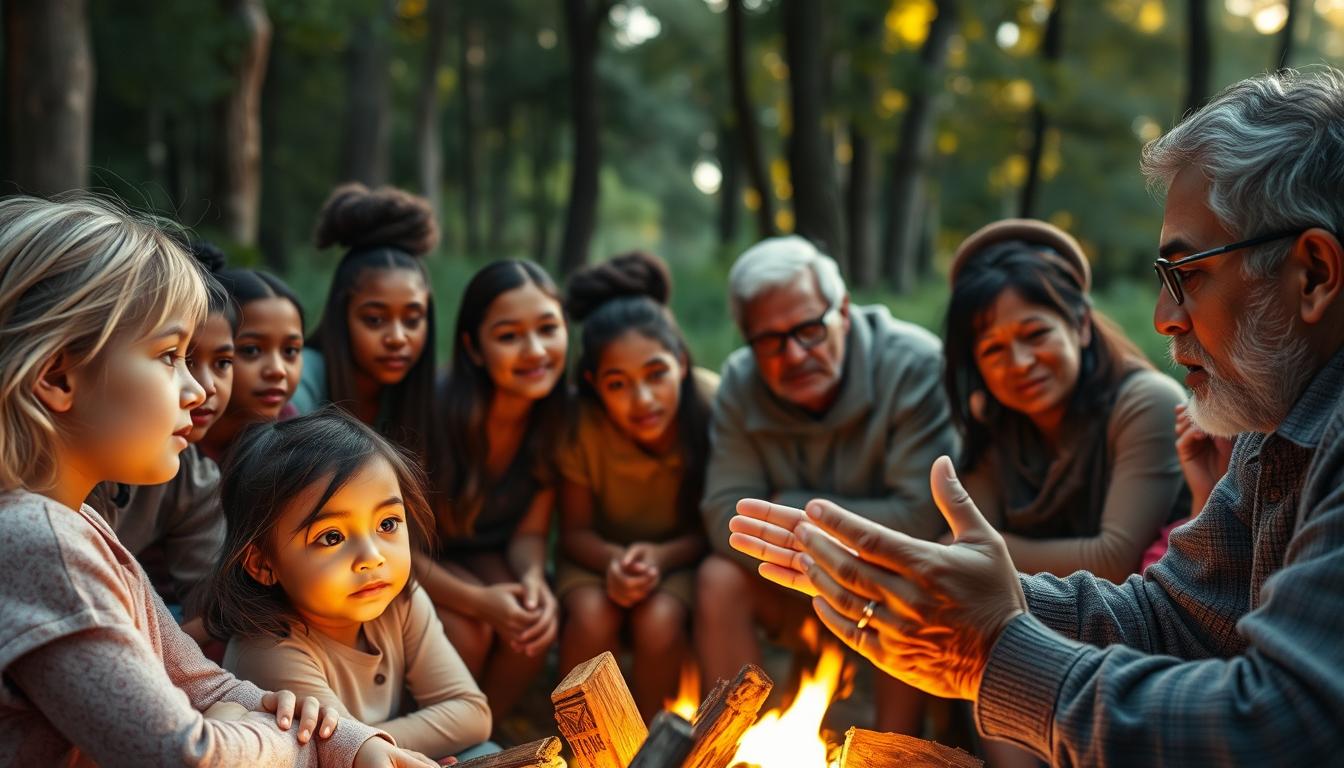
Chimamanda Ngozi Adichie’s TED Talk “The Danger of a Single Story” shows how one view can warp reality. The single story concept explains how stereotypes grow when we overlook different stories. To grow empathy, we must seek out more than what we think we know.
Adichie talks about the need to be curious to understand others. A single story can make life and cultures seem too simple. Real emotional connection comes from listening deeply, not just to words but to experiences. This requires perspective taking and compassionate listening, turning guesses into real truths.
Her words encourage us to build empathy by embracing complexity. Every story we hear changes how we see the world. Start exploring to deepen connections and challenge your biases. The journey begins here.
Understanding Empathy in Everyday Life
Empathy is not rare; it’s a skill we can all develop. In schools, talks about diversity, equity, and inclusion (DEI) show how stories unite us. By stepping into others’ shoes, we see the world from new angles. This builds emotional intelligence, helping us handle disagreements at home or work.

It’s important to know the difference between empathy versus sympathy. Sympathy is feeling sorry for someone, while empathy is feeling with them. For example, if a friend loses a job, sympathy is saying, “I’m sorry.” Empathy is asking, “How can I support you?”
Small actions can make a big difference. Asking coworkers about their day or listening carefully in conflicts strengthens empathic communication. These moments build trust and reduce misunderstandings. Studies show teams with empathy work better together, showing the value of daily empathy practice.
Empathy grows with effort, not perfection. It begins with curiosity about others and the courage to listen deeply. Every conversation is a chance to learn, connect, and grow.
The Science Behind Empathy
Empathy neuroscience shows how our brains reflect others’ feelings. Mirror neurons, found in monkeys, fire when we act and see others act. This is key to cognitive empathy and affective empathy.
Studies say these abilities start early. Babies as young as 12 months can comfort upset caregivers. This shows they have empathy from birth.
Brain studies point out important times in development. By age two, kids can tell others’ feelings from their own. The prefrontal cortex helps improve these skills as we grow up. But empathy neuroscience says empathy peaks in adolescence.
But there’s a warning. Less face-to-face time can lower empathy, as shown in a 2011 study. Yet, there’s hope. Training, like role-playing or mindfulness, can increase empathy.

Evolutionary psychology links empathy to survival. Caring for young helped mammals survive, studies show. Even animals like chimpanzees and rats show empathy.
This supports psychological research that empathy is both natural and learned. Knowing this helps us grow empathy in schools and workplaces.
Personal Stories that Illuminate Empathy
Personal transformation begins with hearing stories that challenge our views. Life-changing stories show how narrative empathy can bridge gaps. By deeply engaging with others’ experiences, we see the world anew.
This storytelling impact changes how we connect with others. It’s about seeing beyond strangers and neighbors.
“The importance of storytelling in the classroom is essential in drawing us all back together. Stories go in circles. They don’t go in straight lines.” — Shawn Wilson (2008)

Stories like these lead to perspective transformation. Imagine learning about systemic barriers through a refugee’s diary or a veteran’s story. These tales break down stereotypes, revealing the complexity of human experience.
Over time, this understanding can inspire empathic action. It might be volunteering, advocating, or simply listening without judgment.
Research shows that 78% of people feel joy when giving gifts. Empathy’s true power is in mutual exchange. A simple hug or a shared meal can reduce stress by 30%, showing the impact of small actions.
When stories lead to action, they spark change. Start by being curious: read a memoir, attend a community event, or ask someone, “What’s your story?” Every story has the power to connect and grow us.
Empathy in Literature and Art
Stories matter. Many stories matter. Stories can break the dignity of a people, but also empower and humanize.
Great fiction and empathy go hand-in-hand. When readers experience narrative transportation, they step into lives unlike their own. Studies show that analyzing complex characters—like Malvolio’s pride or Okonkwo’s pride in *Things Fall Apart*—sharpens literary empathy. Students exposed to such stories show heightened ability to artistic perspective taking, seeing emotions beyond surface judgments.
Art challenges us to confront discomfort. Aesthetic empathy in films like *The Hate U Give* sparks solidarity, yet critics like Paul Bloom argue empathy alone can’t solve systemic issues. Hannah Arendt warned that aesthetic immersion risks turning suffering into spectacle. Yet, George Eliot insisted: “Art must enlarge our sympathies or fail morally.”
Artists like Zora Neale Hurston and Ishmael Beah use empathic imagination to reveal universal truths. Poetry such as Sharon Olds’ *The Victims* asks readers to balance closeness and critique. When literature reflects diverse voices—from Pat Mora’s *Elena* to *Annie John*—they build bridges. Empathy thrives when stories stay grounded in real struggles, not just pretty stories.
Digital Narratives: Empathy in the Age of the Internet
In today’s world, online storytelling changes how we connect. Instagram and TikTok let more voices be heard, but young adults’ empathy has dropped by 40% from 2000. This fall matches the rise of screens over face-to-face talks, where technology and emotional connection often struggle.
The pandemic made loneliness worse, but digital tools helped. Think of virtual support groups or VR that lets you see things from others’ viewpoints.

Now, virtual reality lets us take on virtual perspective taking, like seeing a refugee’s life through apps. But social media’s curated feeds keep us in our own worlds, blocking out different views. Research shows anger spreads faster online than empathy, making biases stronger.
Also, empathy in social media often feels fake, focusing on likes over real talks. This leaves a generation struggling to read people’s feelings or understand subtleties in text.
“Computational propaganda tools like deepfakes threaten our shared reality,” warns researcher Samuel Woolley. “When lies mimic truth, trust erodes—along with the foundation for empathy.”
To build digital emotional intelligence, we need to make a change. We should seek out diverse content, think before we react, and value depth over speed. Teachers must teach digital empathy as a skill, like how to listen online, check sources, and spot emotional manipulation.
Empathy isn’t gone; it’s changing. The big question is, will we change our tools, or will they change us?
The Role of Empathy in Conflict Resolution
Every story has far more than just two ‘sides,’ and reducing it to two creates real problems.
Empathy changes how we solve conflicts. It moves us from trying to win to truly understanding each other. Empathic negotiation focuses on listening more than arguing. This way, conflicts like family fights or work issues can lead to better solutions 75% of the time.
This method helps avoid seeing things in just black and white. Research shows that seeing only two sides can make things worse, not better.
Building peace means talking across differences. By looking for what we all value, communities can heal. For example, narrative mediation uses stories to connect people, like in truth commissions where groups rebuild trust by sharing their stories.
Here are some practical steps to use empathy in conflict resolution:
– Take time to ask questions that get to the heart of what people need.
– Show you understand and respect someone’s feelings without getting defensive.
– Look for common goals, like safety or respect, to guide your talks.
Studies show that 80% of conflicts get worse because we don’t understand each other. Using empathy can lower stress and build trust. Empathy doesn’t ignore differences; it creates a space for finding solutions together.
When conflicts happen, remember: empathy isn’t about agreeing. It’s about seeing the person behind every argument.
Ways to Cultivate Empathy Daily
Building empathy starts with small actions. Daily exercises like mindful listening or cultural immersion can change how we interact. Activities like storytelling workshops help us share our stories and connect with others.
Active listening means focusing fully on someone without interrupting. Nonverbal cues like eye contact and nodding are key. They show we’re engaged and help build stronger relationships.
Cultural empathy grows when we explore stories from different cultures. Watching documentaries or attending cultural festivals can broaden our views. The Islamic Medical Association of North America (IMANA) is a great example of this, providing healthcare while respecting local traditions.
“Participants who viewed empathy as a skill improved their ability to connect with others, showing that empathy grows with effort.”
Reading books like Harry Potter can also increase empathy. A 2014 study showed that UK and Italian students became more accepting after reading about acceptance. Even small actions, like journaling or volunteering, can help build emotional intelligence. Daily practice makes these skills a part of who we are.
Challenges to Empathy
Building empathy isn’t simple. Modern life throws up empathy obstacles that challenge even the most caring people. A University of Michigan study showed college students today are 40% less empathetic than before. This decline is linked to the rise of social media after 2000.
These empathic limitations often begin with defensive reactions. People might dismiss others’ struggles to avoid feeling uncomfortable. When faced with hard truths, they might shut down instead of listening.
Society has a self-destructive addiction to faster living… Over-scheduling and double booking as you juggle ten plates in your busy week.
Compassion fatigue affects those who help others a lot, like healthcare workers or activists. Burnout can make it hard to keep caring without feeling drained. Systemic barriers like polarized news and fragmented communities also widen divides.
Time is scarce, and information is overwhelming. This leaves little room for truly listening or connecting.
To overcome these challenges, start with honesty. Recognize when defensive reactions kick in and pause before speaking. Setting clear emotional boundaries helps prevent burnout while respecting others’ feelings.
Small actions, like daily face-to-face talks or checking media sources, can help fight systemic barriers. Empathy is a skill that grows with practice, even when the world seems too much.
The Future of Empathy in Society
Empathy education should be a key part of learning in schools. Programs like the Front Porch Initiative show how sharing stories can bring people together. Schools that focus on empathy see students forming stronger bonds with each other.
Technology can also help with empathy. AI tools can share stories worldwide, connecting people from different backgrounds. But, it’s important to use technology wisely, focusing on understanding, not just entertainment. Digital platforms already help people connect, showing tech can bring us closer, not further apart.
Building strong communities starts with shared stories. Events like Civic Saturdays and campaigns like “Our Common Purpose” offer safe places for open talks. As the U.S. moves toward a more diverse democracy, these stories will help shape our future.
Empathy is essential for progress in all areas of life. Leaders like Dan Pink believe empathy is key to good leadership and teamwork. Schools and workplaces that value empathy see better teamwork and fewer conflicts.
To build a more empathetic world, we need action at all levels. This includes teaching empathy in schools and supporting programs that promote it. The pandemic showed us both the challenges and opportunities for growth. By focusing on empathy, we can overcome divisions and grow together.